

10 Simple Steps To A Plastic-Free Kitchen
Reduce the amount of plastic you use every day in your kitchen with these 10 simple steps to a plastic-free kitchen. From food packaging to kitchen accessories, we’ve found the best kitchen products to make your kitchen more eco-friendly and plastic-free.
Disclosure: This post contains affiliate links, which means if you make a purchase through these links, we may receive a small commission at no extra cost to you.
Take a look in your pantry, fridge and cabinets and you’ll probably find a surprising amount of plastic food storage, kitchen accessories and single-use plastic. The good news is that it’s easy to swap or phase out plastic items and replace them with more sustainable options. If you’re looking to make your kitchen more sustainable and eco-friendly, the plastic-free kitchen swaps below are a great starting point. As a reminder, kitchen appliances have plastic cords that can’t be avoided, so some of the items below may include a small amount of plastic.
Human Health Risks From Plastic Exposure
Aside from environmental problems created from plastic use, there are also health issues associated with our use of plastics.
Plasticizers like phthalates and BPA are used to make plastic more flexible and durable. The problem with plasticizers is that they can leach into your food, water or through your skin and disrupt hormone activity in your body. Research shows that phthalates can have negative long-term impacts on our reproductive, neurological and developmental systems, and the adverse impacts on human health are impossible to ignore. BPA also has pathological effects on the body and is a known endocrine disruptor.
Along with adverse health risks from plasticizers, plastic also creates microplastic and nanoplastic bits and pieces that have been found throughout the body.
Microplastics have been found on the brain and measured in the blood, breast milk, placenta, and in stools.
While research on microplastics and human health is still emerging, studies suggest that long-term exposure could potentially lead to issues such as heart attack, stroke, gastrointestinal, respiratory, or immune system disturbances. In fact, a newly published 2025 study found a positive correlation between microplastic exposure and high blood pressure, diabetes and stroke.
Environmental Impacts From Plastic Exposure
It can take up to 1,000 years for plastic to degrade. The less plastic we use and throw away now, the less plastic will crowd our landfills and pollute our environment in the future.
No matter how conscientious we are at recycling, only 9% of the world’s plastic gets recycled. That’s a pretty depressing statistic. And 90% of the debris floating on the ocean’s surface is plastic. All those cute seals and dolphins and penguins can get entangled in or ingest the plastic that we throw away. Yes, that’s on us.
Of the 300 million tons of plastic produced every year, half of that is manufactured for single-use products like plastic water bottles, coffee cup lids, plastic straws and coffee pods. With a wide range of buying options, we can choose to be more conscientious consumers and reduce plastic waste.
There are also many opportunities to use plastic-free products in the kitchen. From stainless steel snack and lunch containers to everyday sustainable kitchen essentials, swapping plastic products for more eco-friendly ones will benefit our health and reduce plastic waste in landfills.
Start with these 10 simple steps to cut down on plastic use in the kitchen and strive toward a plastic-free kitchen. It’s up to us to stop using and throwing away so much plastic.
Phase Out Plastic Kitchen Tools & Accessories
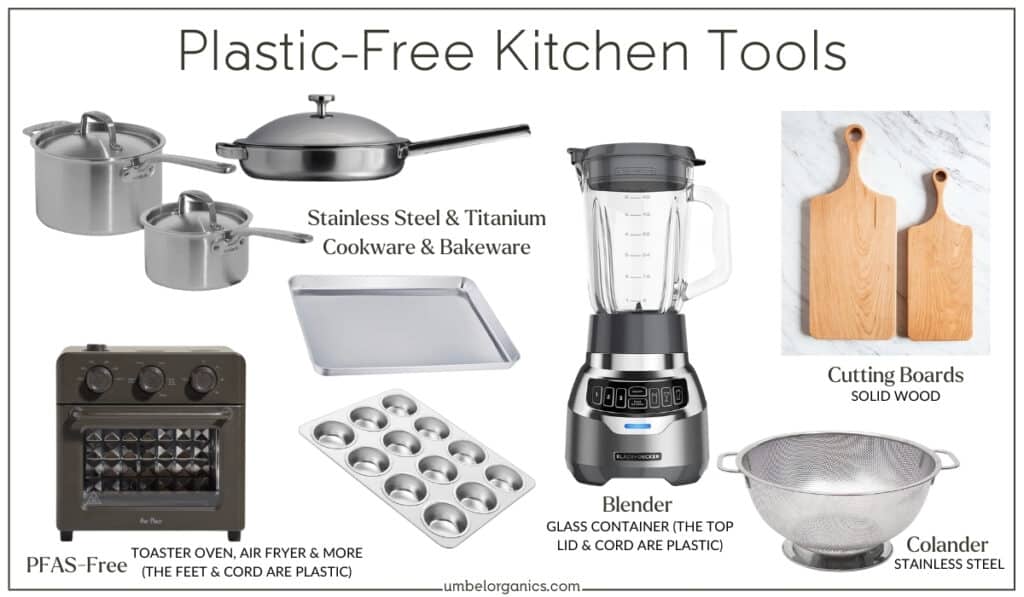
Kitchen accessories like plastic cutting boards can be exposing you to more plastic than you’d like to know about. Every time you slice, plastic is shedding from the board onto your food. I personally use solid wood cutting boards, but you can also find glass and stainless steel cutting boards– they will dull your knives though.
Find all of my favorite plastic-free non-toxic cutting boards here.
- Rugged Woodworking UT Cutting Boards have a large selection of high-quality hardwoods and sizes. They are Handcrafted from a single solid piece of premium hardwood. The boards are finished with USDA certified organic fractionated coconut oil, carnauba wax, and local beeswax.
I stress the importance of ditching your Teflon pans for the sake of your health. Yes, your Teflon pan is also releasing microplastics along with PFAS. Find my recommendations for non–toxic cookware here, and don’t forget to do a full audit of your bakeware- find non-toxic bakeware here.
- Stick with 5-ply stainless steel for all of your pots, like this Made In 6-Piece Cookware Set.
- I also love this Our Place Titanium Always Pan Pro, which gives you the same properties as a non-stick pan, but the design mimics the pattern of the lotus flower leaf, giving it non-stick properties without a ceramic or Teflon coating.
- TeamFar Stainless Steel Baking Sheets are perfect for baking and cooking- I love sheetpan dinners!
- Fox Run Stainless Steel Muffin Pan is a baking favorite.
Kitchen appliances are another source of plastic exposure. My best advice is to find appliances that have no plastic parts touching your food. If you’re looking for appliances that have little to no plastic, my non-toxic kitchen appliance guide has everything from blenders to toasters to rice cookers to ice cream makers and more.
- This Black + Decker Powercrush Blender has a 6 cup glass jar and a steel blade, so the only plastic is in the lid and the base.
Don’t overlook kitchen basics like a colander or strainer!
- The Livefresh Stainless Steel Colander– 18/10, 304 stainless steel . 20% thicker than other colanders, with premium riveted handles that will never come off. Features a rapid draining ring base that won’t tip over.
Plastic-Free Cooking & Baking Utensils
Whether you’re stirring a pot of bubbling soup or flipping pancakes, if you’re using a plastic utensil, you risk heating up the plastic and enhancing any leaching of plasticizers into your food. There’s also a risk of leaching microplastics if you run plastic through the dishwasher or are scraping a bowl or pan. Find all of my non-toxic cooking utensil recommendations here.
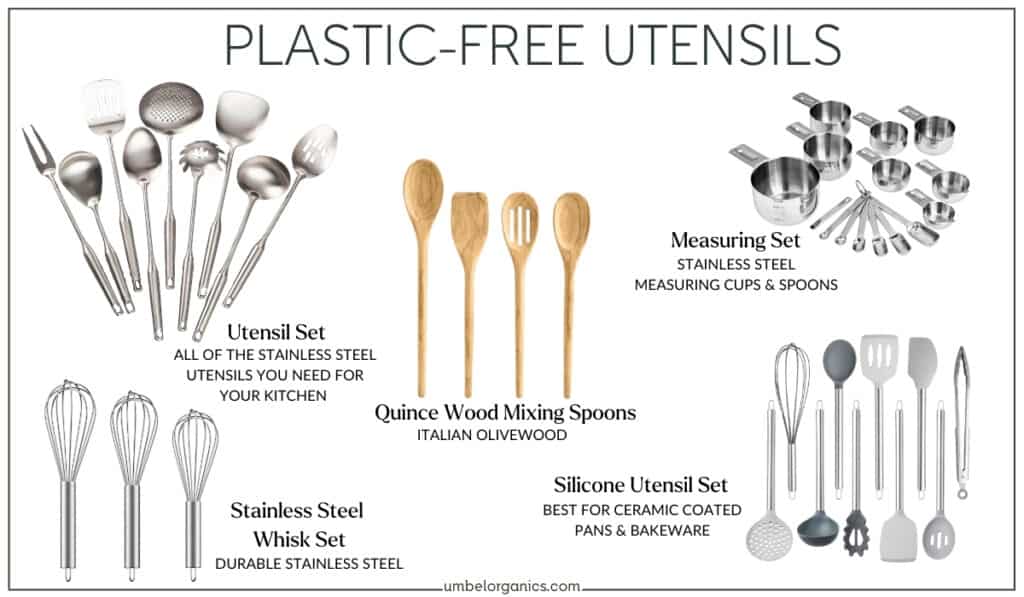
- 9-Piece Stainless Steel Kitchen Utensil Set– Made of food-grade heavy duty 304 stainless steel, forged in 1-piece, sturdy and anti-rust. Very clean lines, good weight and balance, comfortable grip, ergonomic design. Easy To hang.
- Quince Italian Olivewood Kitchen Utensil Set– Crafted from 100% Italian Olivewood, pre-oiled with food-safe mineral oil.
- Hudson Stainless Steel Measuring Cups & Spoons– Made of premium food-grade 18/8 stainless steel that will never rust or corrode. Simply throw them in the dishwasher for quick and easy cleanup.
- Cook With Color Silicone Cooking Utensils– Made with premium food grade silicone.
- Stainless Steel Whisk Set– Durable stainless steel.

Clean Dishes With Less Plastic
Conventional sponges are made with oil-based plastic. Replace sponges with bamboo handle scrubbers or natural fiber sponges. I ditched my sponge years ago, and I’ve never looked back. I keep a cup of baking soda by the sink and use a few sprinkles to dislodge any food particles left on dirty plates and bowls. For seriously stuck-on bits, I soak pans in water and use a bamboo pot scrubber to scrape away stubborn food.
Most dish soap comes in a plastic container, and yes, it’s recyclable. But if you really want to go plastic free, swap it out for a block of dish soap (like No Tox Life Vegan Dish Washing Block). If you just can’t part with liquid dish soap, Attitude sells liquid dish soap in bulk. Fill up a glass oil dispenser bottle with liquid dish soap and refill from the bulk jug as needed.
- No Tox Life Vegan Dish Washing Block– New updated formula with bigger, fluffier bubbles and stronger grease cutting in all water types. The DISH BLOCK® concentrated dishwashing soap is a cleaning powerhouse with a rich, sudsy lather. Cuts stubborn grime and grease on dishes, pots and pans. With added aloe vera to be gentle on your hands. Free of dyes and fragrance.
- Isshah Plastic-Free Sponges– One side is made from wood cellulose and the other side made from sisal hemp fibers and coconut husk, making it a sustainable and eco-friendly choice for your kitchen cleaning needs.
- Organic Bamboo Pot Scrapers– clean and remove stuck-on food, sticky gunk, hardened scrambled eggs, grease and tough grime, goo, and more.
- Vove Bamboo Dish Brush– This eco-friendly dish brush features sisal bristles sourced from Mexico’s Palmyra & Sisal plants, and it comes with 3 replacement heads.
- Tablecraft Dish Soap & Oil Dispenser– Refill this glass dish soap dispenser with bulk dish soap and use it again and again.
- Attitude Bulk Dish Soap– Attitude Bulk dish soap features a container that uses 68% less plastic and includes 5 times more product than its bottle counterpart, which means less packaging waste. The effective non-toxic grease-cutting formula helps remove stubborn food residue from dishes, pots & pans. This plant-based formula is in compliance with EWG’s ingredient evaluations for healthy cleaning. ECOLOGO Certified for its reduced impact on the environment and it’s biodegradable.
Plastic Free Glasses & Mugs
When it comes to plastic waste, single use water bottles and plastic straws are a huge problem. Instead of buying a six pack of bottled water, use a stainless steel water bottle and refill it again and again. If you use plastic straws, swap them out for stainless steel straws that you can wash and reuse forever. Dishes and drinkware products for kids are commonly made of plastic, so look for plastic-free dishes for kids.
Single use coffee cups come with a plastic lid that adds to landfill waste and creates debris in our oceans. Bring a reusable coffee travel mug to your local coffee shop. As long as it’s clean, most coffee shops welcome this eco-friendly practice. If you’re a tea drinker, choose a brand of tea that uses plastic-free teabags.
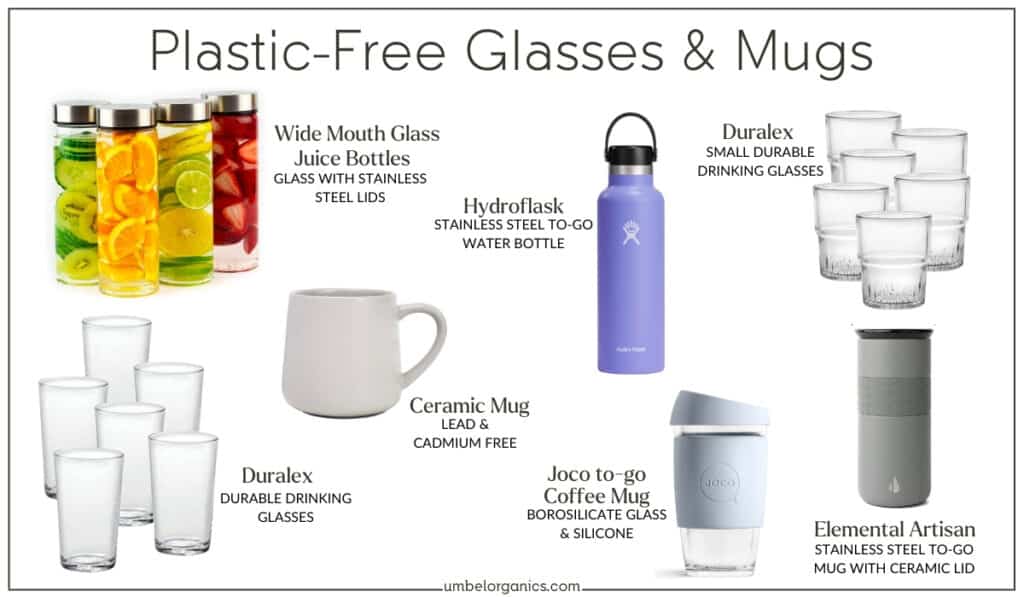
- Wide Mouth Glass Juice Bottles– Leakproof and airtight stainless steel lids. Easy pouring and storing for healthy, homemade beverages.
- Ceramic Coffee Mug– Designed with strong ceramic construction, made of lead-free, cadmium-free, high quality ceramic. Suitable for hot and cold drinks. Dishwasher and microwave safe.
- Duralex Glass Tumblers- Impact & chip resistant, extremely durable Duralex tempered glass is 2.5 times stronger than ordinary glass. Lead free, cadmium free, and BPA free.
- Hydroflask Water Bottle– Made with 18/8 pro-grade stainless steel to ensure durability, pure taste and no flavor transfer.
- Duralex Water Glasses– Impact & chip resistant, extremely durable Duralex tempered glass is 2.5 times stronger than ordinary glass. Lead free, cadmium free, and BPA free.
- Elemental Artisan Insulated Tumbler– Insulated stainless steel tumbler with ceramic lid.
- Joco Reusable Glass Cup– Borosilicate glass and food grade silicone to-go mug.
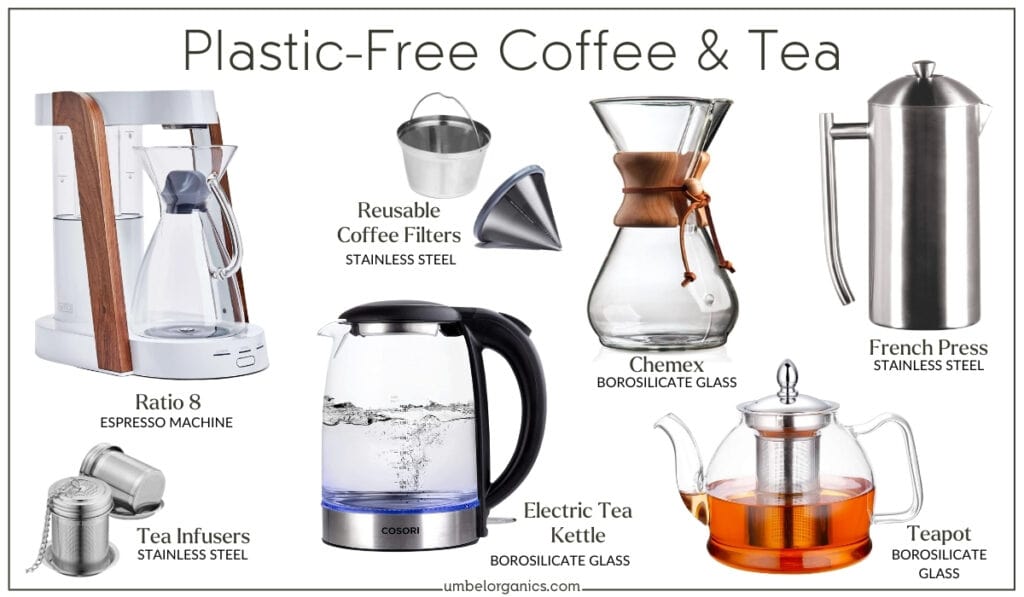
Plastic Free Coffee & Tea
Coffee pods (like K-Cup and Nespresso) may be convenient, but they’re creating piles of plastic waste in our landfills. There are many other types of coffee makers that use little to no plastic. If you do insist on using a Keurig, here is the reusable filter that I recommend: Casabrews Stainless Steel Reusable K Cup Coffee Pod. Check out more of my plastic-free coffee maker recommendations here.
Instead of using a Nespresso or Keurig maker, make your coffee with a Chemex Pour-Over Glass Coffee Maker pour over coffee system or a Bodum Chambord French Press Coffee Maker.
- Ratio 8 Coffee Maker– features a stainless steel showerhead, glass water supply line, precision-machined aluminum, borosilicate glass, and a selection of premium hardwoods.
- Stainless Steel Coffee Kone– Reusable stainless steel coffee filter for Chemex.
- Reusable Stainless Steel Coffee Filter– 18/8 stainless steel coffee filter that fits Black + Decker and Mr. Coffee, or select a model for Cuisinart Ninja.
Do you drink tea? Teabags from some brands of tea contain microplastic. One option is to purchase loose leaf tea and use a fine mesh strainer. If you still like the convenience of teabags, purchase tea brands that use plastic-free teabags.
- House Again Extra Fine Mesh Tea Ball Infuser & Cooking Infuser– 18/8 stainless steel with extra fine mesh holes.
- Cosori Electric Glass Kettle– 304 stainless steel and borosilicate glass with automatic shut off.
- Hiware Glass Teapot With Removable Infuser– Borosilicate glass teapot with high quality 18/10 stainless steel mesh infuser.
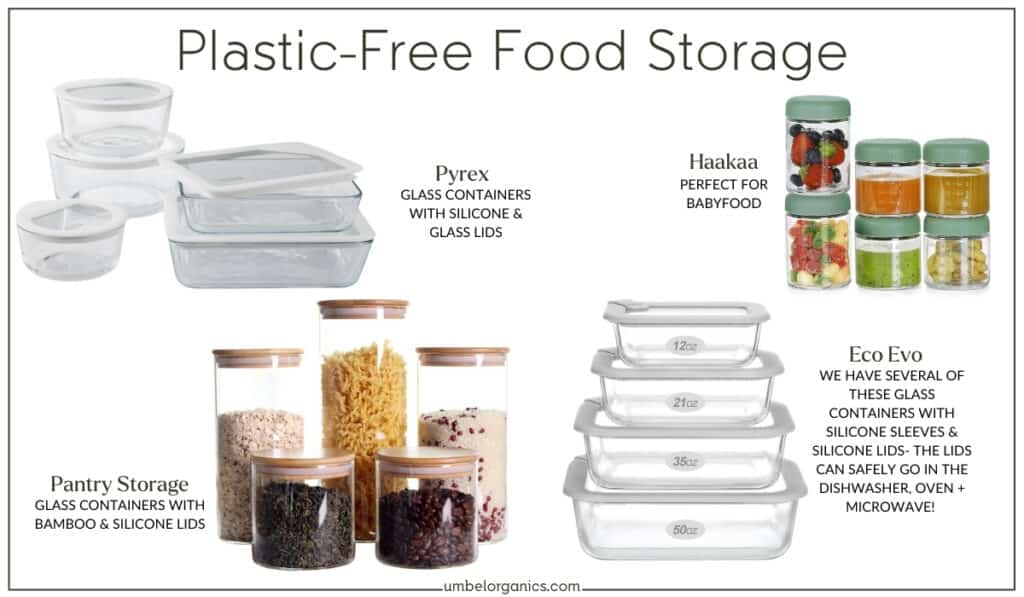
Plastic Free Food Storage
When it comes to purchasing food, look for items that come in a glass jar as opposed to plastic containers. Some brands of natural peanut butter come in glass jars, as does cooking oil, vinegar, condiments like ketchup and mustard, and spice jars.
Frozen meals often come in plastic containers. Instead of reaching for pre-cooked frozen meals at the grocery store, cook at home and double your recipes. Store the extra food in airtight glass containers with lids. Freeze the leftovers and say goodbye to single-use plastic containers. Luckily there are many high quality plastic-free food storage containers on the market.
- Pyrex 10-Piece Glass Food Storage Set– 100% plastic-free food storage! Both the containers and the lids are made of durable glass, which allow you to easily view the contents and to be assured that your food will not come into contact with harmful chemicals. Silicone rims ensure an airtight, leak-proof seal and are oven, microwave, freezer and dishwasher safe.
- Glass Food Storage Canisters– For storing dry food like pasta or flour.
- Haakaa Glass Baby Food Jars– These baby food storage jars are made with borosilicate glass with clearly marked measurements on the side of each jar.
- EcoEvo Glass & Silicone Food Storage Containers– Made from borosilicate glass with food-grade silicone and glass lids. All components are safe in a dishwasher, and will not release toxic chemicals or deteriorate with time.

Replace Plastic Food Storage With Plastic-Free Options
Plastic wrap and plastic baggies are just so handy…but they’re made with potential endocrine disruptors. Although phthalates were phased out of plastic wrap in 2006, low-density polyethylene (LDPE) or polyvinylidene chloride (PVDC) are now used.
LDPE may contain diethylhexyl adipate (DEHA), a potential endocrine disruptor and carcinogen. Another reason to make the swap? All that plastic builds up in landfills, adding to our long-term waste problem.
Sending my kids to school without a ton of single-use plastic in their lunch is something I’ve gotten better about, and there are so many stainless steel snack and lunch container options that work great on-the-go!
- Bee’s Wax Food Wraps– Beeswax is what gives these sheets of organic cotton material its sticking power. The warmth of your hands helps you mold the wrap around food, bowls or plates. Washable and reusable over and over again.
- Ukonserve Stainless Steel Lunch Containers– Made of 304 (18/8) stainless steel. The lids are plastic-free, durable, flexible, platinum-grade silicone.
- Reusable Silicone Bowl Lids– These food-safe silicone lids create a tight seal on bowls and are both microwave and dishwasher safe.
- Stasher– Made with incredibly durable, food-grade platinum silicone.
- Spaza Cotton Dish Covers– Breathable cotton, no sweating of leafy greens and condensation.
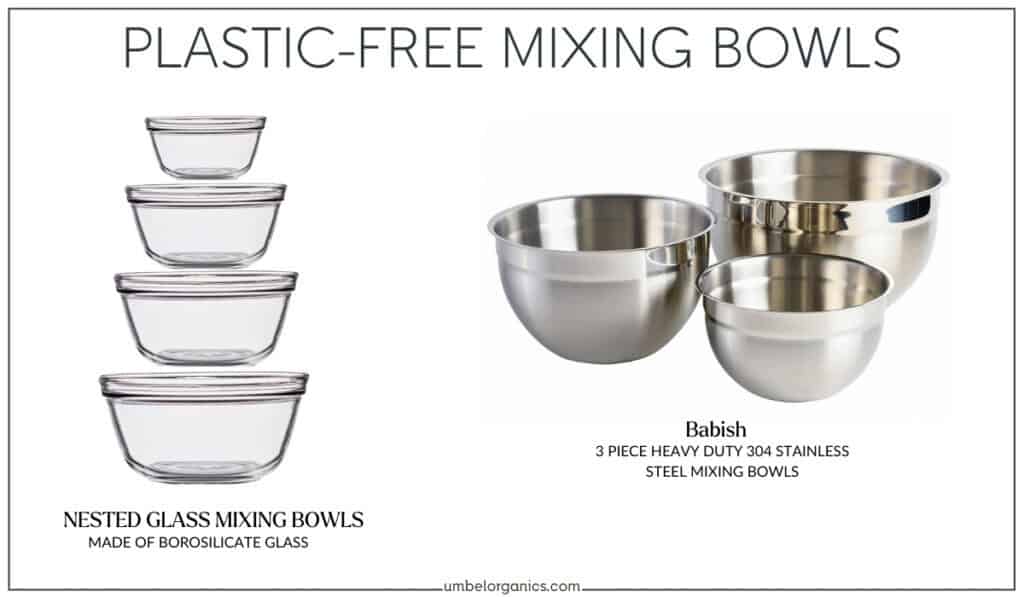
Plastic-Free Mixing Bowls
A sneaky way to increase your microplastic exposure is by using plastic mixing bowls. The more you mix and scrape a plastic bowl, the more chances you have of releasing microplastics into your cookie dough or muffin batter. Use either glass or stainless steel mixing bowls instead of plastic bowls.
- Anchor Hocking Nested Glass Mixing Bowls– These durable glass mixing bowls are microwave oven safe (up to 425°F) and dishwasher safe, making them an essential tool for both quick meal prep and baking.
- Babish 304 Stainless Steel Mixing Bowls– Made of durable #304 stainless steel that won’t stain or interact with food’s flavors. Includes 1.5-quart, 3-quart, and 5-quart bowls.
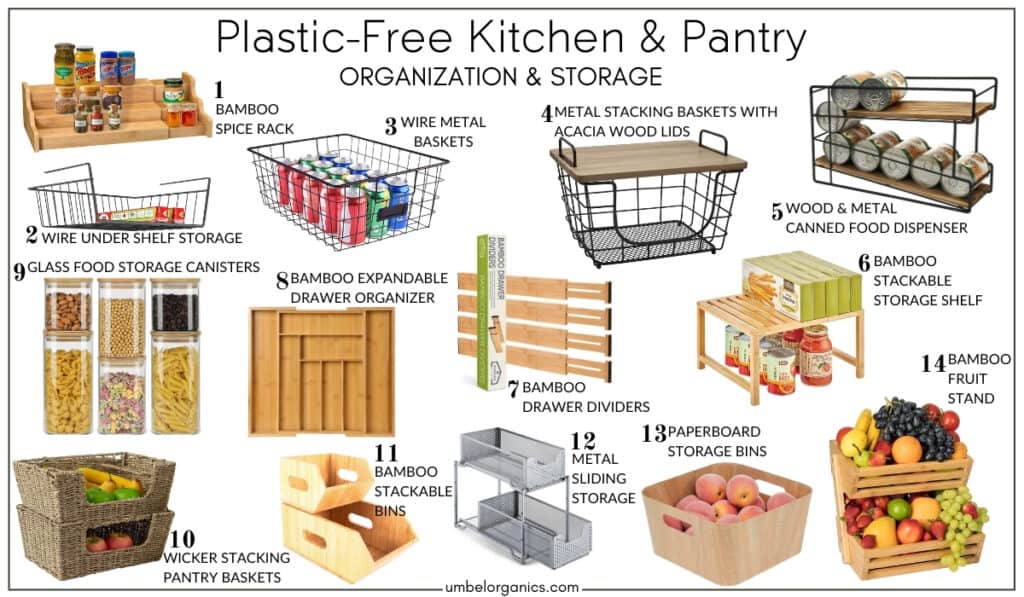
Plastic-Free & Eco-Friendly Kitchen Storage
As more plastic products fill our environment, we not only have to contend with plastic waste filling up our landfills and taking 1,000 years to degrade, but tiny plastic particles, called microplastics, are migrating all over the world, mixing in with dust and sand and traveling through ocean water. Microplastics can be found in marine animals, table salt and our drinking water, among other things. In fact, humans consume about 5 grams, the size of a credit card, of microplastics every week.
There are tons of plastic organizers and plastic storage bins on the market. Every time you need a new storage bin or organizer for your pantry or kitchen, purchase a plastic-free option. Beyond the kitchen, swap out plastic storage bins for plastic-free organizers in the rest of your home.
1// Bamboo Spice Rack
2// Wire Under Shelf Storage
3// Wire Metal Baskets
4// Metal Stacking Baskets With Acacia Wood Lids
5// Wood & Metal Canned Food Dispenser
6// Bamboo Stackable Storage Shelf
7// Bamboo Drawer Dividers
8// Bamboo Expandable Drawer Organizer
9// Glass Food Storage Canisters
10// Wicker Stacking Pantry Baskets
11// Bamboo Stackable Bins
12// Metal Sliding Storage
13// Paperboard Storage Bins
14// Bamboo Fruit Stand
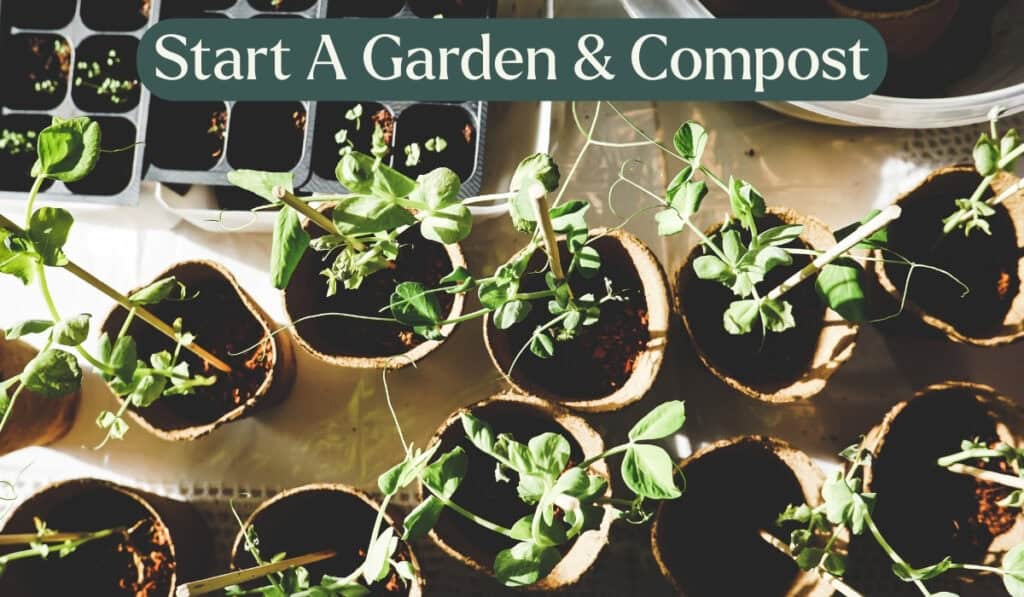
Start A Garden
We’ve been able to cut way back on plastic use in the summer by starting a garden. Even if you don’t have much space, you can grow herbs in containers and pick a small amount whenever you need some for a recipe. Think of how many plastic clamshells of herbs you won’t need to bring home from the grocery store. If gardening is out of the question, bring a basket to the farmer’s market and fill up your basket instead of using grocery store produce plastic bags.
Compost
The more you put in the garbage, the more plastic bags you use. Put less in the garbage can and compost your food scraps. Learn more about what you can compost here. Set a small compost bin on your counter and you’ll be surprised at how much less waste goes in your garbage bin.
More Natural Living Inspiration
